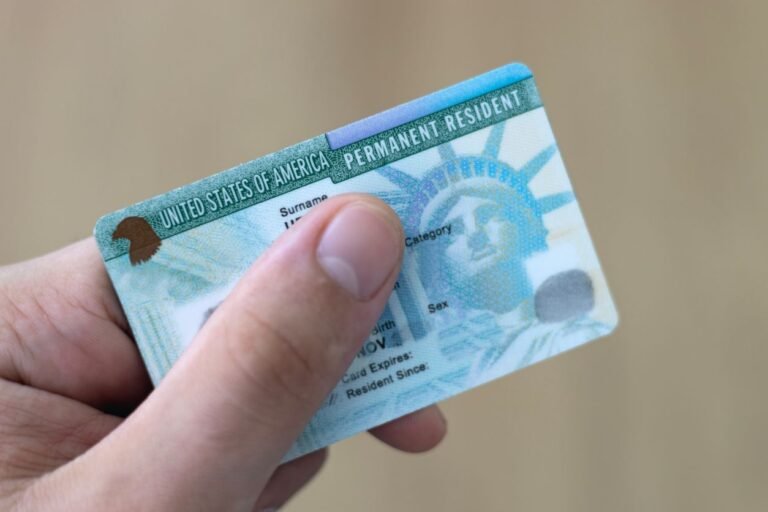
Every year, roughly 15 million people from around the world enter the United States Diversity Visa Lottery hoping to win one of just 55,000 permanent resident visas. That’s a selection rate well under one percent. Despite those odds, the program remains one of the few genuinely accessible pathways to a U.S. green card for people who don’t have family ties, employer sponsorship, or significant capital to invest. But the process is more nuanced — and more misunderstood — than most people realize. If you’ve ever considered entering, or you’re preparing to apply for the first time, here’s a thorough breakdown of how the system actually operates, who’s eligible, and what happens at each stage from registration to landing in the United States.
What Exactly Is the Diversity Visa Lottery?
The Diversity Immigrant Visa Program, commonly known as the DV Lottery or Green Card Lottery, is a U.S. government program administered by the Department of State. Congress established it through the Immigration Act of 1990 with a specific purpose: to diversify the immigrant population by granting visas to nationals of countries with historically low rates of immigration to the United States.
The word “lottery” is accurate. Winners are selected at random by a computer-generated process from a pool of qualified entries. There is no scoring system, no merit evaluation, and no interview at the selection stage. If your entry meets the eligibility requirements and the system picks your case number, you move forward in the process. If it doesn’t, you try again the following year.
The program operates on an annual cycle. Registration typically opens in early October and runs for about 30 to 35 days. Results are announced the following May. The entire process from entry to visa issuance can stretch across 18 months or more.
Who Qualifies for the Green Card Lottery?
Eligibility comes down to two primary requirements: country of birth and education or work experience. Both must be satisfied.
The Country of Birth Requirement
Your eligibility is determined by where you were born, not by your current citizenship or country of residence. Each year, the Department of State publishes a list of countries whose natives are not eligible because those countries have sent more than 50,000 immigrants to the United States over the preceding five years. Countries typically excluded from the program include Mexico, India, China (mainland), the Philippines, South Korea, the United Kingdom (excluding Northern Ireland), Canada, Brazil, Colombia, the Dominican Republic, El Salvador, Haiti, Jamaica, Nigeria, Pakistan, and Vietnam — though this list shifts slightly from year to year based on immigration data.
If you were born in an excluded country, there are two potential workarounds. First, if your spouse was born in an eligible country, you can claim eligibility through their country of birth. Second, if neither of your parents was born in or was a resident of your birth country at the time of your birth, you may be able to claim chargeability to one of your parents’ countries — provided that country is eligible.
The Education or Work Experience Requirement
You must meet one of two thresholds. The first and most straightforward is having completed a high school education or its equivalent — meaning 12 years of formal elementary and secondary education resulting in a credential similar to a U.S. high school diploma. GED certificates do not satisfy this requirement.
The alternative path is having at least two years of qualifying work experience within the last five years in an occupation that requires a minimum of two years of training or experience to perform. The Department of State uses the U.S. Department of Labor’s O*NET OnLine database to classify which occupations qualify. Roles classified in Job Zone 4 or Job Zone 5 — positions requiring considerable to extensive preparation — meet the threshold. Many common jobs do not qualify, so it’s worth checking the database before assuming your work experience is sufficient.
Who Does Not Qualify?
Beyond the country exclusion list, several other factors can disqualify an applicant. If you lack both a qualifying high school education and the required work experience, you are ineligible regardless of your country of birth. Applicants who have previously been found to have submitted fraudulent entries or who have violated U.S. immigration law may also be barred.
It’s worth noting that age is not a formal eligibility requirement. There is no minimum or maximum age to enter. However, the education requirement effectively establishes a practical floor — most applicants are at least 18, since completing a high school education before that age is uncommon in most countries.
How the Application Process Works
Step One: The Online Registration
Registration happens exclusively through the official Department of State website at dvprogram.state.gov. The application is called the Electronic Diversity Visa Entry Form, or E-DV, and it is free. There is no fee to enter the lottery. Anyone charging you a fee to submit an entry is either providing an optional assistance service or running a scam — the U.S. government does not charge for registration.
The registration window is typically announced in late September, with the submission period running through early October to early November. Exact dates vary by year, so checking the official site as September approaches is essential.
Each person may submit only one entry per year. If you submit more than one, all of your entries will be disqualified. If you’re married, both you and your spouse can each submit a separate entry. If either is selected, the other is included as a derivative beneficiary.
Step Two: What You Need for the Application
The form itself is straightforward but demands precision. You will need to provide your full legal name, date and place of birth, country of eligibility, a recent digital photograph meeting strict specifications, your mailing and email addresses, your highest level of education, and information about your spouse and all unmarried children under 21.
The photograph requirement is a common point of failure. The image must be recent (taken within the last six months), 600 by 600 pixels, in JPEG format, with a white or off-white background. Glasses are not permitted in the photo. The Department of State provides a free online photo validation tool, and using it before submission is strongly recommended.
Every piece of information on the form must be accurate and must exactly match your official documents. Discrepancies — even minor ones like a misspelled middle name — can create issues during the visa interview stage if you are selected.
Step Three: The Confirmation Number
After submitting your entry, you receive a confirmation number. This is the only way to check your results. The Department of State does not notify winners by email or postal mail. If you lose this number, you have no way to find out whether you were selected. Write it down, save it digitally in multiple places, and treat it as the most important piece of paper in the process.
How Winners Are Selected
Selection is entirely random and computer-driven. The Department of State uses software to randomly select approximately 85,000 to 100,000 entries from the total pool — significantly more than the 55,000 visas available. This overselection accounts for the fact that many selectees will not complete the process, either because they fail the interview, miss deadlines, or choose not to pursue the visa.
Visas are allocated across six geographic regions, with a greater number going to regions with lower immigration rates to the United States. No single country can receive more than seven percent of the total available diversity visas in a given year.
Being selected does not guarantee a visa. It means you have been chosen to proceed with the application, which involves submitting extensive documentation, paying fees, undergoing a medical examination, and attending a visa interview at a U.S. embassy or consulate.
What Happens After You’re Selected
Document Preparation
Selected applicants receive instructions to complete the DS-260, the Online Immigrant Visa Application. This is a detailed form requiring information about your background, family, education, employment history, and security-related questions. You will also need to gather supporting documents: birth certificates, police clearance certificates from every country you’ve lived in for 12 months or more since age 16, military records if applicable, court and prison records if applicable, and proof of education or qualifying work experience.
The Medical Examination
Every applicant and accompanying family member must undergo a medical examination conducted by a physician designated by the U.S. embassy. The exam includes a general physical, blood tests, chest X-rays for tuberculosis screening, and verification of required vaccinations. This exam must be completed before the visa interview and is valid for six months.
The Visa Interview
The consular interview is the final major hurdle. A consular officer will review your application, verify your documents, confirm your eligibility, and ask questions about your background and intentions in the United States. The officer has discretion to approve or deny the visa. Common reasons for denial include failure to meet the education or work experience requirement, submission of fraudulent documents, criminal history, or health-related grounds of inadmissibility.
If approved, you will pay the immigrant visa fee and receive your visa. You must enter the United States before the visa’s expiration date, which will not extend beyond September 30 of the fiscal year in which the visas are allocated.
Arriving in the United States
Upon your first entry, you will go through immigration processing at the port of entry. Your passport will be stamped, and your green card — the physical permanent resident card — will be mailed to your U.S. address within several weeks. You are a lawful permanent resident from the moment you are admitted.
Common Mistakes That Derail Applications
Several errors consistently trip up applicants across every cycle. Submitting more than one entry is the most avoidable and the most costly — it results in automatic disqualification with no appeal. Using an old photograph, or one that doesn’t meet the technical specifications, is another frequent issue. Failing to include all eligible family members on your entry (specifically your spouse and all unmarried children under 21, even if they do not plan to immigrate) can result in visa denial at the interview stage.
Missing deadlines is equally damaging. The registration window is short and firm. The document submission and interview scheduling timelines after selection are also non-negotiable. Visas not issued by September 30 of the relevant fiscal year are forfeited permanently.
Important Timeline to Keep in Mind
The typical cycle runs roughly as follows: registration opens in October, closes in November, results are announced the following May, document preparation and interviews occur between roughly October and September of the following fiscal year. The entire process from entry to arrival in the United States can take anywhere from 12 to 20 months under normal circumstances.
Delays happen. Embassy backlogs, slow police clearances, and additional administrative processing can all push timelines. Starting your document preparation immediately upon selection — particularly police certificates, which can take months in some countries — is the single best way to protect your case.
Final Considerations Before You Apply
The Diversity Visa Lottery is one of the most democratic immigration pathways in the world. It doesn’t require a job offer, a family sponsor, an advanced degree, or a large investment. What it does require is careful attention to eligibility rules, precise execution of the application, and thorough follow-through if you’re selected.
No agent or consultant can improve your odds of being selected. The draw is random. What a good immigration attorney can do is help you navigate the post-selection process — the DS-260, the document gathering, the interview preparation — where the stakes are highest and mistakes are most costly.
If you’re eligible, there is no strategic reason not to enter. The application is free, takes about 20 minutes, and the downside of not being selected is simply trying again next October. For the people whose numbers are drawn, it’s the beginning of an entirely different life.